
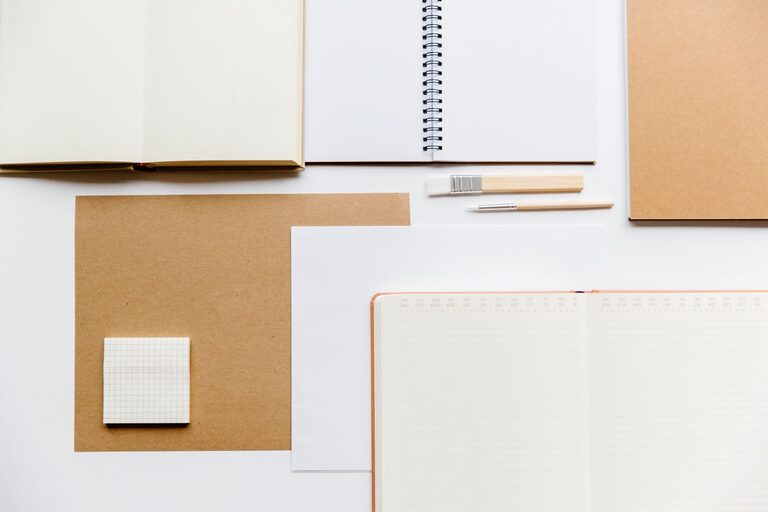
A good notebook can make everyday tasks easier. It can hold your plans, ideas, notes, sketches, lists and reminders in one convenient place. However, choosing one is not simply a matter of picking the most attractive cover. A notebook that looks great in a shop may end up sitting unused in a drawer if it does not suit the way you write and organise your life.
The best notebook is the one that fits naturally into your routine. Before buying one, think about what you want to use it for, where you will use it and which features will make writing more comfortable.
Start with its main purpose
The first question to ask is: what will this notebook be used for?
Different tasks suit different notebook designs. A notebook for work meetings may need a durable cover and plenty of pages. One for creative ideas might benefit from blank paper. A notebook for daily planning may work better with sections, dates or space for lists.
Common uses include:
– Daily planning and to-do lists
– Meeting or class notes
– Journalling
– Creative writing
– Sketching and drawing
– Recipe collecting
– Travel notes
– Recording ideas and reminders
– Tracking hobbies or projects
If you have several uses in mind, decide whether you want one all-purpose notebook or separate notebooks for different activities. One notebook is easier to carry and maintain, while separate notebooks can make information easier to find.
Avoid choosing a notebook based on an ideal version of yourself. For example, if you rarely write long reflections, a large journal with pages designed for lengthy entries may not be the right choice. Choose something that matches what you already enjoy doing, with room for habits you realistically want to build.
Choose a practical size
Notebook size affects how often you will use it. A large notebook gives you plenty of writing space, but it may be inconvenient to carry. A small notebook can travel anywhere, although its pages may feel cramped for detailed notes.
Consider where the notebook will live:
– A desk notebook can be larger and heavier.
– A handbag or backpack notebook should be compact enough to carry comfortably.
– A bedside notebook should fit on a table without getting in the way.
– A notebook for travel should be light and durable.
– A work notebook may need enough space for several pages of notes each day.
A5 is a popular middle-ground size because it offers useful writing space without being too bulky. A6 and pocket-sized notebooks are convenient for quick notes. Larger formats are helpful for planning, diagrams and longer writing.
If possible, compare the notebook with something you already carry, such as your phone, tablet or diary. This gives you a better idea of whether it will fit your routine.
Pick the right paper layout
The page layout affects how flexible the notebook feels. The main options are lined, plain, dotted and squared paper.
Lined paper
Lined pages are a reliable choice for writing, lists and meeting notes. They help keep handwriting tidy and make it easy to use the full page. Check the line spacing, especially if you write with large letters or prefer to leave space between ideas.
Plain paper
Plain pages are best for drawing, diagrams, mind maps and free-form notes. They also work well if you dislike feeling restricted by lines. However, writing in a straight line may take more effort.
Dotted paper
Dotted pages offer structure without being too noticeable. They are useful for bullet points, calendars, tables, sketches and simple layouts. Dotted notebooks are popular with people who like to customise their pages.
Squared paper
Squared pages help with charts, measurements, diagrams and neatly arranged notes. The grid may feel distracting for ordinary writing, so consider whether you will use it regularly.
If you are unsure, think about your current notes. Do you mainly write sentences, draw shapes, create lists or mix several formats? Choose the layout that supports your most common activity.
Check the paper quality
Paper quality can make a major difference to how pleasant a notebook is to use. Look for pages that feel smooth enough for your preferred pen but not so slippery that writing becomes uncomfortable.
If you use fountain pens, markers or gel pens, check whether the paper is designed to reduce ink bleeding and showing through. For ordinary ballpoint or pencil users, standard paper may be perfectly suitable.
Before buying, test a few pages if the shop allows it. You can also read reviews that mention:
– Whether ink bleeds through the page
– How much writing shows on the reverse side
– Whether the paper feels rough or smooth
– How well pencil can be erased
– Whether the pages remain flat while writing
Thicker paper often feels more substantial, but it can also make the notebook heavier and more expensive. Choose the level of quality you need rather than automatically selecting the thickest paper available.
Think about the binding
The binding determines how comfortably the notebook opens and how well it holds up over time.
A spiral or wire-bound notebook often lies flat, making it convenient for writing at a desk. It may also be easier to fold back on itself, although the wire can catch on bags or clothing.
A stitched notebook usually opens more smoothly than a glued notebook and can last well with regular use. A glued notebook may be less expensive, but its pages can become loose if the binding is not strong.
Some notebooks include removable or refillable pages. These can be useful if you want to rearrange notes or continue using the same cover. On the other hand, a simple bound notebook may feel less complicated and require no extra parts.
Consider the cover and durability
The cover should suit where and how you plan to use the notebook. A soft cover is light and easy to pack, while a hard cover offers more protection and a firm surface for writing.
Think about durability if the notebook will travel frequently. Useful features may include:
– Rounded corners
– An elastic closure
– A strong cover
– A ribbon page marker
– An inside pocket
– Water-resistant materials
– A pen loop
Do not choose features simply because they sound useful. Every extra feature can add weight, bulk or cost. Pick the ones that solve a real problem in your routine.
Make it easy to find and use
A notebook is more likely to become part of your routine if it is easy to reach. Store it where you are most likely to need it, such as beside your computer, near the front door or on your bedside table.
You can also make it easier to use by:
– Keeping your favourite pen with it
– Giving it a clear purpose
– Numbering important pages
– Adding a simple contents page
– Using the first page for basic instructions or goals
– Leaving a few pages for future ideas
– Choosing a cover you can identify quickly
Avoid creating a system so complicated that maintaining it becomes a task by itself. A notebook should support your routine, not become another source of work.
Buy one notebook before buying several
It is tempting to buy a collection of notebooks at once, particularly when they are attractive or discounted. However, buying one first gives you a chance to test the size, paper, layout and binding in real life.
Use it for at least a week or two and notice what works. Is it comfortable to carry? Do you have enough writing space? Do your pens behave well on the paper? Does the format encourage you to open it regularly?
If the answer is yes, you have found a practical match. If not, your experience will help you choose more carefully next time.
Choose the notebook you will reach for
The perfect notebook is not necessarily the most expensive, stylish or feature-packed option. It is the one that feels comfortable, suits your purpose and fits naturally into your day.
Focus on your actual habits, then consider size, page layout, paper quality, binding and durability. A notebook that is easy to carry and pleasant to write in has a much better chance of becoming useful. Once you find that combination, keeping notes can become a simple and satisfying part of your routine.