
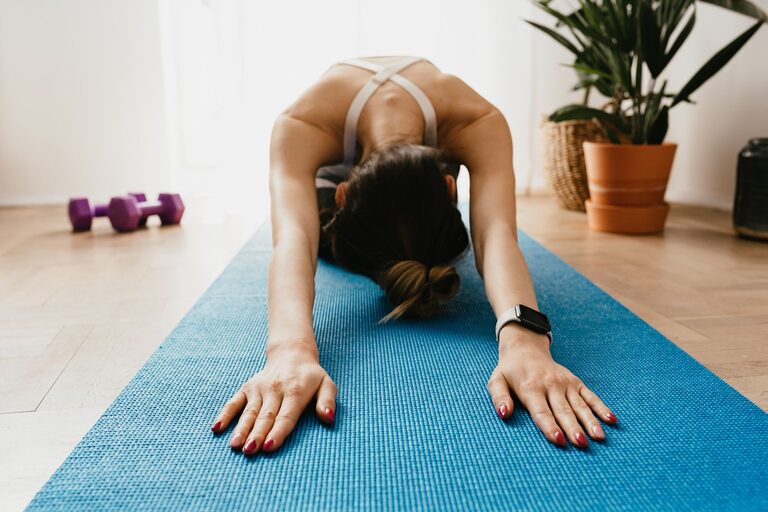
Stretching is a simple way to add movement to your day. It needs very little space or equipment, and you can adapt it to suit your routine, fitness level and available time.
For beginners, the main goal is not to force your body into difficult positions. Instead, focus on moving slowly, breathing steadily and becoming more aware of how your body feels. With regular practice, stretching can become a relaxing part of your morning, evening or exercise routine.
Why stretch at home?
Stretching at home is convenient and easy to fit into a busy schedule. You can spend five minutes between tasks or set aside 15 to 20 minutes for a longer session.
A regular stretching routine may help you:
– Move more comfortably during everyday activities
– Feel less stiff after sitting for long periods
– Improve your awareness of posture and body position
– Prepare your body for gentle movement
– Create a calm break during the day
– Develop a consistent exercise habit
Stretching works best when it is comfortable and regular. You do not need to be naturally flexible, and you do not need to copy advanced poses.
Before you begin
Choose a clear, comfortable area where you can move without bumping into furniture. A yoga mat, folded towel or carpeted floor can provide extra comfort, although these are not essential.
Wear clothing that allows you to move freely. Loose, comfortable clothes are often suitable, but avoid anything that restricts your knees, hips, shoulders or waist.
If you are stretching after sitting or resting, begin with a few minutes of gentle movement. Walk around the room, roll your shoulders or march slowly on the spot. This helps you ease into the session rather than moving straight into a deep stretch.
Keep these basic principles in mind:
– Move slowly and avoid bouncing.
– Stretch to a gentle pulling sensation, not sharp or intense discomfort.
– Breathe normally throughout each stretch.
– Keep your movements controlled.
– Stop if something feels painful, unusual or unsafe.
– Use a wall, chair or table for balance when needed.
If you have a current health concern, ongoing pain or a condition that affects movement, ask a qualified health professional for individual guidance before starting a new routine.
Simple stretches for beginners
The following stretches cover several major areas of the body. Move at a comfortable pace and spend around 15 to 30 seconds in each position. Repeat each stretch once or twice, depending on how you feel.
Neck and shoulder stretch
Sit or stand tall with your shoulders relaxed.
Slowly lower your right ear towards your right shoulder. Do not lift the shoulder to meet your ear. Hold gently, then return to the centre and repeat on the other side.
For a shoulder stretch, bring one arm across your chest. Use your other arm to support it lightly, keeping your shoulders relaxed. Hold, then change sides.
These movements can be useful after computer work or other activities that involve holding your head and shoulders in one position.
Chest stretch
Stand near a doorway or open area. Place your forearms against the door frame, with your elbows around shoulder height. Step forward slightly until you feel a gentle stretch across the front of your chest.
Keep your ribs relaxed and avoid leaning too far forward. If this position does not feel comfortable, simply clasp your hands behind your back and gently draw your shoulders down while standing tall.
Upper back stretch
Sit or stand with your hands reaching forward at shoulder height. Clasp your hands or place your palms together, then gently round your upper back as if you are reaching towards an object in front of you.
Allow your head to follow the movement naturally, without forcing your chin towards your chest. You should feel a mild stretch across your upper back and between your shoulders.
Side stretch
Stand with your feet about hip-width apart. Raise your right arm overhead and slowly lean to the left. Keep both feet grounded and avoid twisting your body.
Return to the centre and repeat on the other side. Keep the movement gentle and stop before you feel strain in your back.
Standing thigh stretch
Use a wall or chair for balance. Bend your right knee and bring your heel towards your bottom. Hold the ankle or the lower part of your trouser leg, if comfortable.
Keep your knees close together and your standing leg slightly soft rather than locked. Hold gently, then change sides.
If you cannot comfortably reach your ankle, skip this stretch or use a different position. Balance and control are more important than reaching a particular point.
Hamstring stretch
Sit on the edge of a sturdy chair with one foot flat on the floor. Extend the other leg forward, keeping the heel on the floor and the toes pointing upwards.
With a straight but relaxed back, lean forward slightly from your hips. Avoid rounding your back or reaching forcefully towards your toes. Change sides after holding the stretch.
Calf stretch
Face a wall and place both hands against it. Step one foot back, keeping the heel down and the toes pointing forward. Bend your front knee while keeping the back leg comfortably extended.
You should feel a gentle stretch in the calf of the back leg. Hold, then switch sides. Take a shorter stance if the stretch feels too strong.
Hip stretch
Sit on a chair with both feet flat on the floor. Place your right ankle over your left thigh, if comfortable. Keep your back long and lean forward slightly until you feel a gentle stretch around the outside of your hip.
Do not press down on your knee. Return to the starting position and repeat on the other side.
A simple 10-minute routine
A short routine can make stretching easier to maintain. Try this sequence:
- Walk or march gently on the spot for two minutes.
- Stretch your neck and shoulders for one minute.
- Perform the chest and upper back stretches for two minutes.
- Complete the side stretch for one minute.
- Hold the thigh, hamstring and calf stretches for four minutes, changing sides as needed.
Move at an easy pace and take short breaks between positions. If you only have five minutes, choose three or four stretches that match how your body feels that day.
Common beginner mistakes
Stretching should feel calm and controlled. Avoid these common mistakes:
– Bouncing: Repeated bouncing can make it harder to control the movement. Hold a steady position instead.
– Holding your breath: Slow, comfortable breathing can help you stay relaxed.
– Pushing too far: More intensity does not always mean a better stretch.
– Comparing yourself with others: Flexibility differs from person to person.
– Rushing the session: A slow, consistent routine is usually easier to maintain.
– Ignoring your surroundings: Remove clutter and use support for balance when necessary.
How to build a regular habit
Choose a time that fits naturally into your day. You might stretch after waking up, during a work break, after a walk or before bed.
Start with five minutes rather than aiming for a long session straight away. Keep your mat or towel somewhere visible, or set a reminder on your phone. You can also pair stretching with an existing habit, such as listening to music or taking a break from screen time.
Keep track of how often you practise, but do not worry about achieving perfect flexibility. Notice whether the movements feel smoother, more comfortable or easier to remember over time.
Final tips
Stretching at home is most effective when it is gentle, consistent and suited to your needs. Start with simple movements, pay attention to your breathing and give yourself time to learn each position.
A few minutes of comfortable stretching can be a practical way to add movement to your day. As your confidence grows, you can gradually explore new stretches while continuing to prioritise control, comfort and safety.